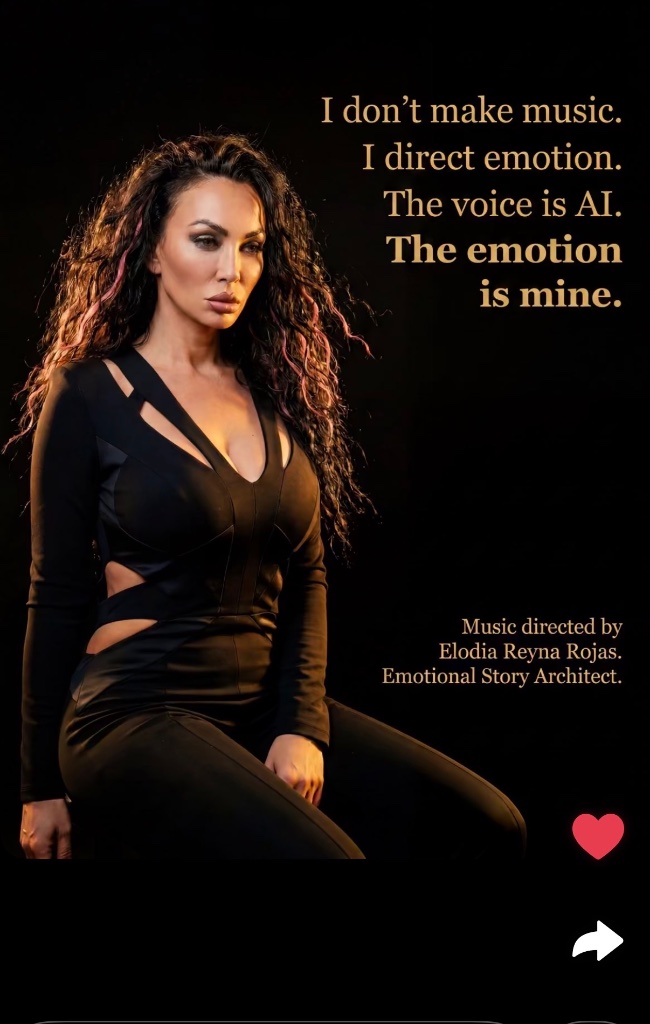
This is the closest I have come to creating a realistic AI version of myself, including my appearance, cloned voice, expressions, movement, delivery, and emotional rhythm.
But this article is about everything that happens before the polished result.
The duplicate accounts.
The subscriptions connected to the wrong login.
The credits you cannot find.
The voice that sounds almost right.
The translation that changes your meaning.
The hours of human direction hidden behind a video that looks effortless.
For the first time, I am formally revealing one of the primary platforms behind my work: HeyGen.
Why I Waited Before Naming the Platforms I Use
Until now, I have created with many AI platforms without formally identifying every application behind every production.
That was intentional.
I did not want to recommend tools after using them once, watching a demonstration, or creating one successful result.
I needed to work inside these platforms long enough to understand what happens after the excitement of the first generation.
I needed to experience the subscriptions, credits, account structures, mobile and desktop differences, updates, mistakes, technical problems, support systems, unexpected results, and hours of correction that are part of real production.
I needed to learn what each platform does well.
I needed to understand where creators can become confused.
I needed to make the mistakes myself.
I needed to solve the problems.
I needed to spend real time and real money learning how these systems work.
Now I am ready to begin sharing that knowledge formally.
HeyGen is the first platform I am introducing in this way, but it will not be the last.
Throughout this year, I will discuss many of the applications inside my working studio.
I will explain what I use them for.
I will show what they helped me create.
I will talk about what worked.
I will talk about what went wrong.
I will explain what changed after updates.
I will explain what I wish I had known before spending the money, using the credits, or beginning the project.
I will also show how these platforms work together, because most completed AI productions are not created inside one application.
They are built across multiple systems, with the human creator making the decisions that connect everything.
Everything in This Production Is Based on the Real Human Me
Everything visible and audible in this production was created, generated, developed, or shaped through AI under my direction.
The avatar is based on my real appearance.
The cloned voice is based on my real voice.
The expressions, movement, emotional delivery, timing, identity, personality, and message are based on the real human me.
What you are seeing is not a replacement for the human creator.
It is the result of the human creator learning how to direct the technology.
For more than a year, I have been training, revising, correcting, and directing this AI avatar to look and sound like me.
I changed the prompts.
I refined her appearance.
I corrected her expressions.
I adjusted her movement, framing, timing, delivery, emotional range, and voice.
I recorded and trained a cloned version of my own voice.
I listened carefully to what sounded right and what still felt artificial.
I kept rebuilding and refining it until it began to sound like me, not simply like a polished digital voice.
This video is the closest I have come to creating a realistic AI version of myself.
Her appearance is based on me.
Her voice is based on mine.
Her communication style was developed through my continuous direction.
The finished video may appear smooth.
The process behind it was anything but automatic.
That is part of what this is about.
The Technology Is Powerful. The Structure Around It Matters Too.
I believe deeply in what AI tools are making possible.
I have used them to create music, avatars, films, visual worlds, stories, translations, educational content, and projects that once would have required an entire production team.
These platforms have given independent creators access to extraordinary possibilities.
That is why I continue using them.
It is also why I believe we need to talk honestly about the systems surrounding the creative tools.
A platform can generate an extraordinary result and still have account structures that confuse users.
A voice clone can sound almost perfect and still need careful direction.
A translation feature can save hours and still misunderstand gender, tone, emotion, or context.
An AI support system can answer many questions and still be unable to see the exact billing record, hidden email address, login method, or subscription conflict causing the problem.
These are not reasons to reject the technology.
They are reasons to understand it better.